is a program from the Swiss public broadcaster RTS.
The November 16, 2025 broadcast addressed the current domestic and foreign political situation in Japan from the perspective of Swiss journalists, also with some interesting details.
To the video in French of 26 minutes I have added subtitles.
For a quick read, the transcript in English is below.
Article 9 of the Japanese Constitution should be of interest to Aikido practitioners. In the context of global warmongering politics, it too is now being targeted.
Introduction
Presenter : Laurent Huguenin-Elie (LHE) LHE : Hello and welcome at Géopolitis.
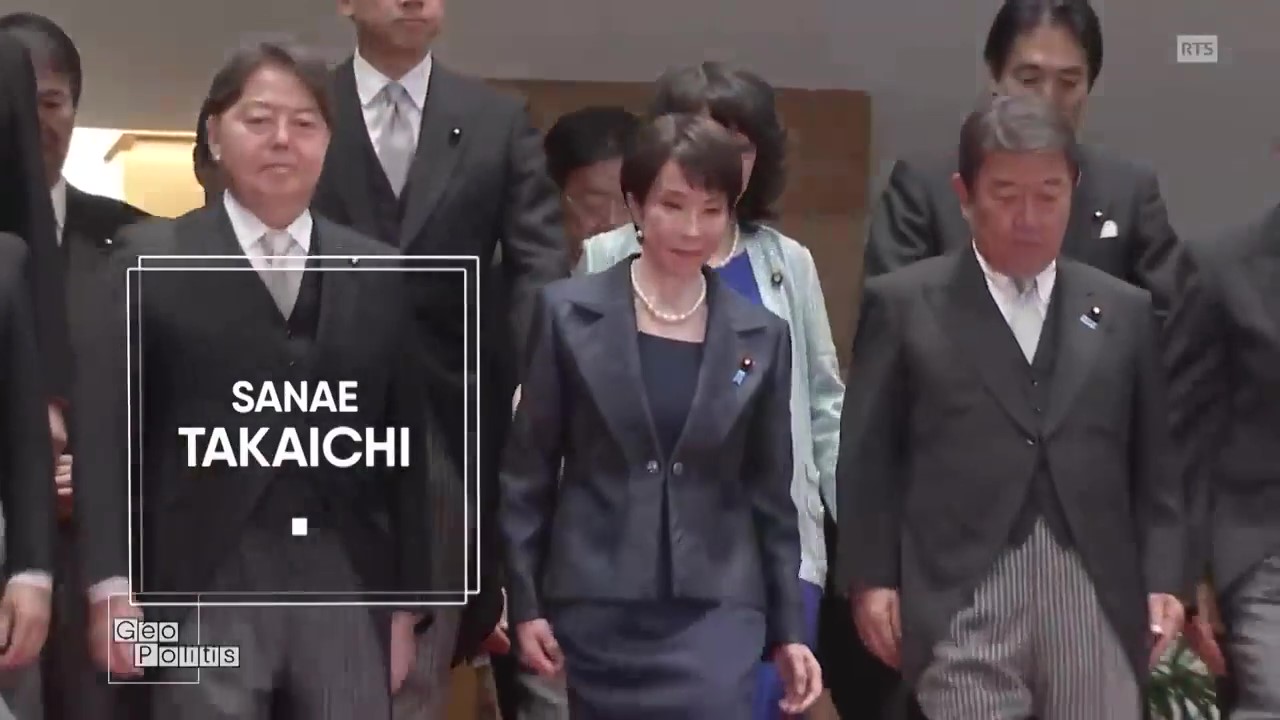
The program includes the appointment of a new prime minister in Japan, which comes amidst a complex domestic and geopolitical context. Sanae Takaichi has taken the reins of the Japanese government. She represents the hardline wing of her party, the LDP. She considers Margaret Thatcher her political role model and is featured in this edition.
Barely having assumed her role as prime minister, Sanae Takaichi has already engaged in a series of diplomatic meetings, beginning with a visit from Donald Trump.
The questions
LHE: What issues are they waiting to address in this Asia-Pacific region?
We will also see that Japan, a pacifist state according to its Constitution, is steadily increasing its military budget. The country would like to strengthen its Self-Defense Forces given the tensions in the region, but is struggling to recruit.
A woman is finally at the head of the Japanese government. This is a first in a political world largely dominated by men. But women's rights movements in the archipelago remain cautious, if not distrustful. Sanae Takaichi's stances on equality and gender issues are far from reassuring them. The new prime minister is considered traditionalist, conservative, and nationalist.
Her appointment is certainly not a coincidence in the current context. Her party, the LDP (Liberal Democratic Party), which has been in power almost continuously since 1955, is going through a turbulent period. Its hegemony is crumbling, and this autumn it opted for a hard line by appointing Ms. Takaichi. But from then on, it lost the support of a centrist party, Kōmeitō, with which it had formed a coalition government, to the benefit of Ishin, a populist party.
So, how does Japan fit into this current situation ?
And how does Japan position itself on the international stage ?
We welcome Constance Sereni, a historian of contemporary Japan. Immediately following this explanatory portrait of the new prime minister by Mélanie Ohayon.
The conservative
Sanae Takaichi, the first woman to lead Japan. Before the parliament, Sanae Takaichi savors this historic moment.
Elected in the first round, she becomes the very first woman to head the Japanese government. Her appointment was officially confirmed a few hours later by Emperor Naruhito. As leader of the Liberal Democratic Party, she advocates a hard line. A nationalist and conservative, she makes no secret of her admiration for Margaret Thatcher. Like Thatcher, she prioritizes fighting inflation in a country where the price of rice has almost doubled in a year. Her ambition: a strong and powerful Japan for the rest of the world.
Takaichi: "Japan is facing a major crisis, both domestically and internationally. We don't have time to stand idly by. We will act boldly and without fear of change, moving forward at full speed from day one."
Behind this image of resolve, her atypical profile stands out within the Japanese political establishment. Born into a modest family in Nara, she is passionate about motorcycles and was the drummer in a heavy metal band at university. After a brief stint as a television commentator, she was first elected to parliament in 1993. She held several positions in the governments of Shinzo Abe, her mentor who was assassinated in 2022. Like him, she is associated with the revisionist movement. She regularly visits the controversial Yasukuni Shrine, a place that notably honors the memory of Japanese people convicted of war crimes during World War II.
Japanese First
Sanae Takaichi's party, the LDP, has governed Japan almost continuously for 70 years. But a recent financial scandal is making it increasingly unpopular. Several party members are suspected of embezzling the equivalent of several million euros. In the last parliamentary elections, the LDP lost its absolute majority in both houses of Parliament. It will therefore have to contend with other parties, including the most extreme ones. One of them just won 14 seats in the Senate. Sohei Kamiya, chairman of Sanseito: "Sanseito is gaining popularity because we state the obvious in an obvious way. Let's implement the policies people expect. That's what I call 'Japan First.' I say the priorities are wrong. Why do foreigners come first when Japanese people are struggling to make ends meet and living in fear?"
With its anti-vax and anti-Semitic rhetoric, Sanseito capitalizes primarily on the growing anxieties of the Japanese population regarding immigration and particularly appeals to a segment of urban youth. Young Japanese woman: "Foreigners who have recently arrived in Japan have no respect for the country. They came to work cheaply. I don't think they bring anything good to Japan."
Japan faces a chronic labor shortage in many sectors. Partly due to a steady decline in the birth rate.
Last year, Japan's foreign population reached a record high of over 3.7 million people, the vast majority of whom are of Chinese origin. However, foreigners still represent only 3% of the country's population.
Majority in Both Houses
LHE: Constance Sereni (CS), Good morning. CS: Good morning. LHE: You are a historian specializing in contemporary Japan at the University of Geneva. The new Prime Minister, Sanae Takaichi, as we've seen here, is very energetic; she has a strong personality. Is she popular? CS: It's quite difficult to gauge the popularity of a politician in Japan because, in reality, most people don't have very strong political opinions. Politics isn't something that truly excites people, who tend to think it's something distant and unrelated. But she has gained considerable popularity, particularly because she is a woman.
Political Dynasties
CS: And for some young Japanese people, it would therefore be an encouraging sign of progress, despite everything, that a woman is in power. LHE: And then she had to make her way in this world of politicians. She herself doesn't come from a political dynasty. And that changes everything. CS: Absolutely. One of the particularities of the political world in Japan, and especially within the LDP, the Liberal Democratic Party, the party that… is that political dynasties are very numerous. We saw it there; the other candidate was, of course, the son of Junichiro Koizumi (*1942). Abe (*1954), for example, was himself the grandson of Kishi (*1896), who was also prime minister. Political dynasties are something very important.
You need deep roots in your region to be elected. Japanese politicians are, first and foremost, local politicians. And family dynasties help preserve these local roots.
But Takaichi Sanae is not like that at all. In fact, she comes from what you might call an ordinary family, a middle-class family. And she didn't benefit from that kind of support at all. She's entirely self-made. She is, of course, the first woman to reach this level in politics. However, she herself has shown on several occasions that she is opposed to the fundamental idea of gender equality and the fact that women can use their maiden names. She had spoken of creating a Scandinavian-style government with many women. In reality, there are only two women in her government. It remains to be seen whether this situation will change in the future. LHE: Japan has experienced a major political crisis with scandals as well. You mentioned the party that has been in power since 1955. So, almost all these years, with one exception. Therefore, things aren't so straightforward for the LDP today. Its power is waning somewhat, and now it has chosen a hard line to represent it through Ms. Takaichi. That wasn't a coincidence, was it? CS: It's... not a coincidence. It's primarily a question of compromise.
That is to say, the problem is that the LDP doesn't have a majority in both houses right now anyway. Indeed, among other things, because of the various financial scandals that have plagued it in recent years. And so it was necessary to form coalitions with different people. It would seem that Koizumi (*1981) hasn't managed to form coalitions that work well enough for him to become the... LHE: Koizumi is her rival. CS: Koizumi is her rival. Absolutely. And Takaichi, she succeeded in this extremely difficult feat of finding a party to support her in obtaining a majority in both houses. LHE: Several challenges obviously await her, first and foremost on the domestic front, starting with the economic issue.
The economic issues. CS: Yes. So the path she's followed so far is indeed that of her mentor. What was called at the time in Japan ABENOMICS, meaning Abe's policy. Shinzo Abe's economic policy, then... Who was assassinated in 2022.
And this policy is primarily about controlling inflation, large-scale public works projects that would stimulate the economy.
Inflation is something she's talked about several times... And inflation is currently dramatic in Japan. The yen is falling, inflation is rising. This means that the purchasing power of Japanese households is extremely low. And this is something that, for once, makes people much more likely to take an interest in politics. LHE: As we saw in the topic, another controversial issue is the presence of foreigners on its soil. Out of a population of 124 million, there are only 4 million foreigners. From a Western perspective, that seems like a small number, doesn't it? CS: Absolutely. In reality, the proportion remains very low. The vast majority of foreigners in Japan are there to work. They are on short-term visas because it's not possible to emigrate to Japan. In fact, it's extremely difficult, if not completely impossible, to obtain Japanese citizenship if you weren't born Japanese. So these are people who have contracts and stay for a few years before returning home. They are workers considered essential in Japan, in jobs that the Japanese themselves no longer want to do. Difficult jobs, tiring jobs, arduous jobs, particularly caring for people and the elderly.
Japan obviously has a very old population, one of the oldest in the world. The foreigners who are frightening, in reality, represent a very small proportion of these foreigners. The few refugees in Japan who have been violently attacked in recent years, especially on social media. Even minor crimes committed by these very poor populations. So naturally, there are indeed offenses that are committed and blown out of proportion in the media, and especially on social networks. This is creating a kind of fear of foreigners that is developing.
LHE: And then there's the presence of foreigners through tourists, who are increasingly numerous. CS: Absolutely, tourists remind us that Japan is not in a position of strength right now. And if people are arriving in droves in Japan right now, it's because the yen is weak. And therefore, Japan is an inexpensive destination.
And Japan has never seen itself that way. Japan behaves this way with countries it considers less important, such as those in Southeast Asia. These are inexpensive countries where people go to have fun. The idea that Japan is one of them is actually very hurtful to a segment of the Japanese population.
LHE: So we've been discussing domestic challenges. But barely in office, Sanae Takaichi also engaged in a series of international meetings at summits in Asia. And on her own soil, with Donald Trump's visit to Japan. The new prime minister is seeking to strengthen ties between the two countries.
Ties with Washington
by Elsa Anghinolfi
Sanae Takaichi wants to strengthen her ties with Washington. The test seems to have been a success for Sanae Takaichi.
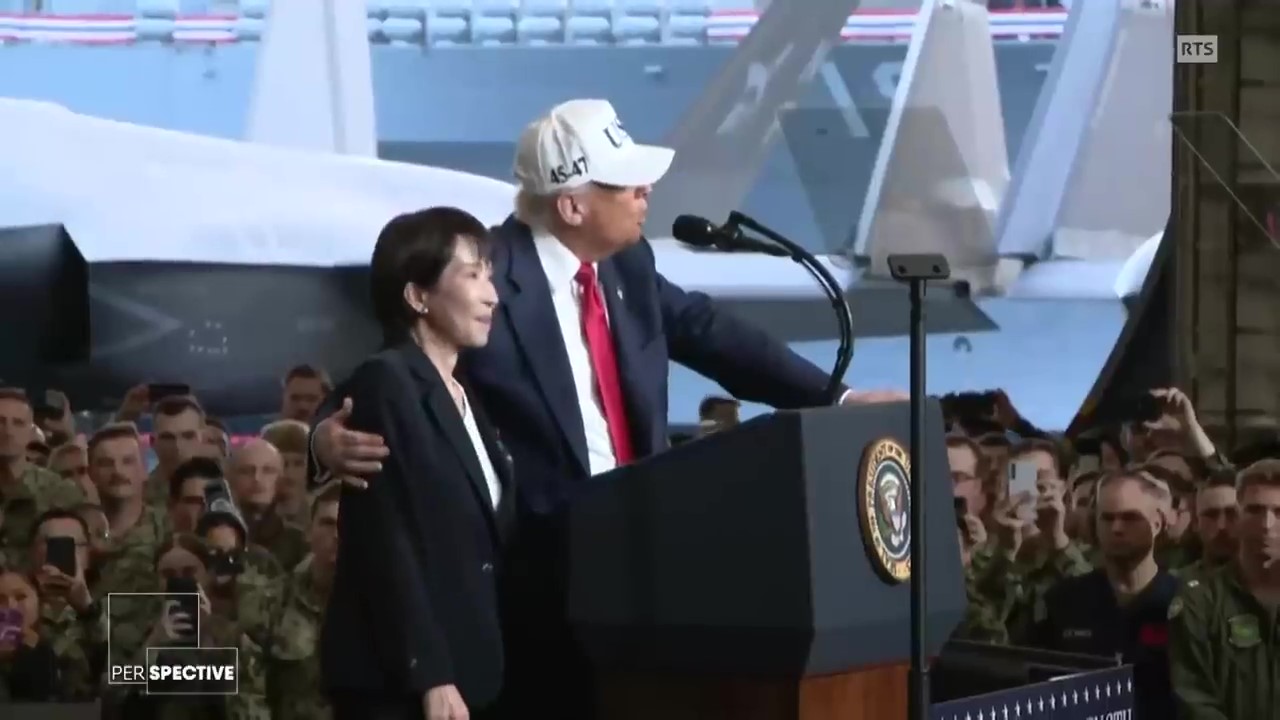
At the US naval base in Yokosuka, south of Tokyo, Donald Trump praised his new diplomatic partner. Trump: "This woman is a winner. You know, we've become very close friends."
Sanae Takaichi spared no effort to curry favor with the American president, whom she met for the first time in Japan at the end of October 2025. A gold-plated golf ball as a gift and American beef on the menu of the dinner.
Japan - USA
The Prime Minister also reportedly announced her intention to recommend him for the Nobel Peace Prize. Takaichi: "In such a short time, the world has become more peaceful. I greatly appreciate your unwavering commitment to peace and stability in the world. I myself have been deeply impressed."
Upon assuming office, Sanae Takaichi stated her intention to elevate relations between the two countries to new heights. Takaichi: "The Japan-US alliance is the cornerstone of our foreign and security policy."
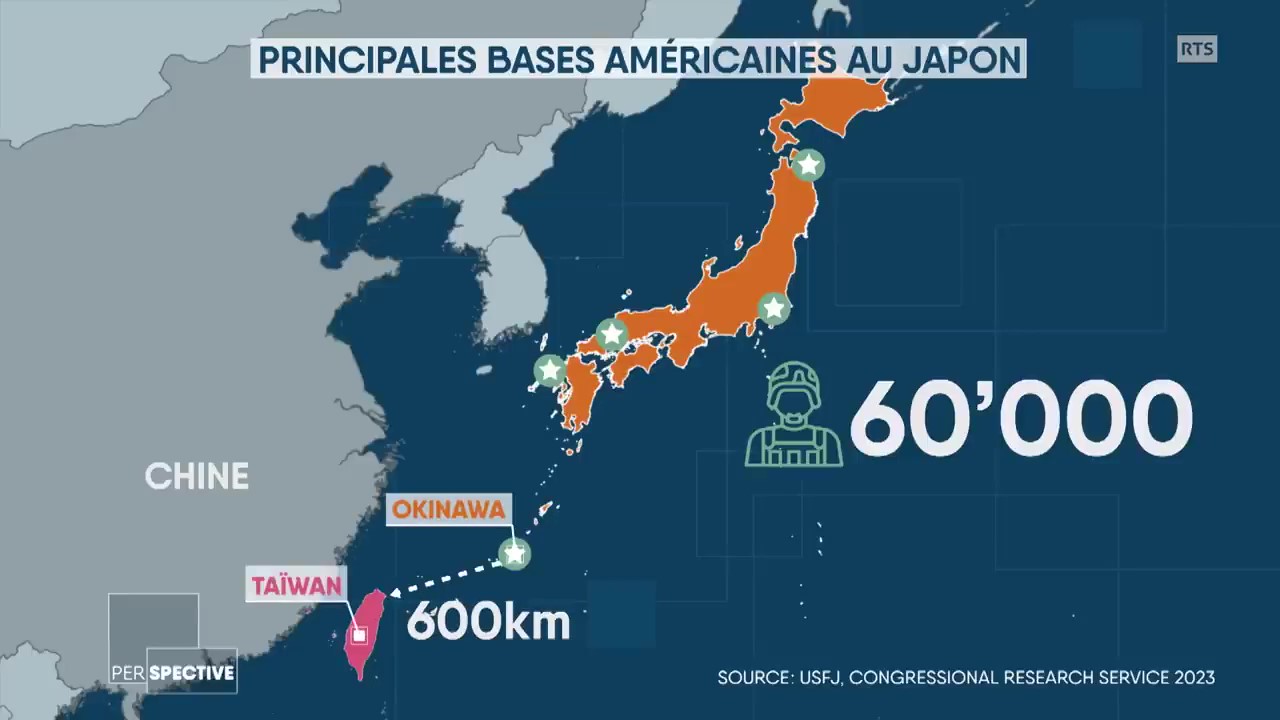
Japan and the United States are bound by a defense treaty signed in 1960. Japan hosts the largest American contingent abroad, approximately 60,000 troops stationed at several bases, the majority of which are on the island of Okinawa. It is located just 600 km from Taiwan, which Beijing considers part of its territory.
According to a statement from the Japanese Ministry of Foreign Affairs, the Prime Minister expressed her concerns about the region to the member states of the Association of ASEAN Nations. "In the East China Sea, activities that infringe upon Japan's sovereignty and provocative military activities are continuing and intensifying."
Peace and stability in the Taiwan Strait are important and have a direct impact on regional security.
Following Donald Trump's visit, Sanae Takaichi flew to South Korea, another important US ally in the region, to attend another regional summit. There, the Prime Minister met with Chinese President Xi Jinping. The two countries pledged to maintain stable and constructive relations.
Smoothing Donald Trump
LHE: Sanae Takaichi chose to smooth things over with Donald Trump. Sanae Takaichi doesn't have much diplomatic experience, but she handled Donald Trump remarkably well. CS: Absolutely. She was initially praised for her skill in managing Donald Trump, who, as you know, is quite a difficult character to deal with on the international stage. And she chose to smooth things over with him, which many commentators found very skillful. That said, she was also heavily criticized for it.
Territorial Tensions
CS: Because some people felt she had given too much ground to the Americans, that she had been too conciliatory. So we'll have to see if she changes her approach. Especially with the famous $500 billion that Japan is supposed to invest in the United States, which remains very vague at the moment. LHE: Japan knows that this alliance with the United States is important. But it is also looking to diversify its contacts. CS: It's also important for the archipelago to play the card with other powers. Absolutely. Japan participates in several Asian international organizations at different levels. For example, the Quad, which is quite small, just Australia, Korea, Japan, and the United States. But ASEAN, which we just mentioned, is very broad. And Japan has always sought to position itself at the center of these organizations as a leader in Asia. This doesn't always endear it to other countries, of course. LHE: The question of Taiwan is obviously also a central concern. Taiwan, which is located—well, if we consider the archipelago as a whole—we know the important strategic position of Okinawa. But there's also an island, for example, that's only about a hundred kilometers away and is called Yonaguni. CS: Absolutely. In fact, the Okinawa archipelago is made up of a multitude of islands. Some of them are very close to Taiwan. Some are even in areas disputed by the People's Republic of China. Yonaguni is very close to Taiwan, and Japan has chosen to place defensive missiles there for the time being.
But in any case, to strengthen its military presence there. This is causing considerable concern among those monitoring the geopolitical tensions in the region. Because, of course, even defensive missiles could be considered a provocation by the People's Republic of China. LHE: The war in Ukraine is an interesting topic because it truly shocked Japan. And for good reason, obviously, as it involves Russia, a hereditary enemy, so to speak, and North Korea. CS: Yes, absolutely. It's primarily this kind of coalition that has formed between Russia, China, and North Korea. Which, from a geopolitical standpoint, is somewhat improbable. But from Japan's perspective, it could be perceived as an anti-Japanese coalition. Because what these countries all have in common is that they have quite a few grievances against Japan. And they have territorial disputes with Japan. Naturally, this greatly worries Japan, which has been living for several decades in a state of concern over North Korea's growing military capabilities. LHE: With Russia and especially Korea, China... this relationship to history is obviously central and also complex for Japan. CS: Absolutely. Of course, the historical issues that divide South and North Korea, and China, Russia, and Japan, are genuine historical problems. And they deserve to be resolved more thoroughly.
But in reality, what we see most of all is that these historical problems are being exploited politically to become points of contention that allow for the mobilization of public opinion. That is to say, accusing Japan of war crimes, the Nanking Massacre, or the comfort women. Of course, this is legitimate, but it also serves to reinforce anti-Japanese sentiment among the population. And this can be very useful, depending on the situation, for the Chinese or Korean government. LHE: Faced with various threats, Japan is accelerating its remilitarization, and the Self-Defense Forces are struggling to attract new recruits.
Rearmament
By Natalie Bougeard
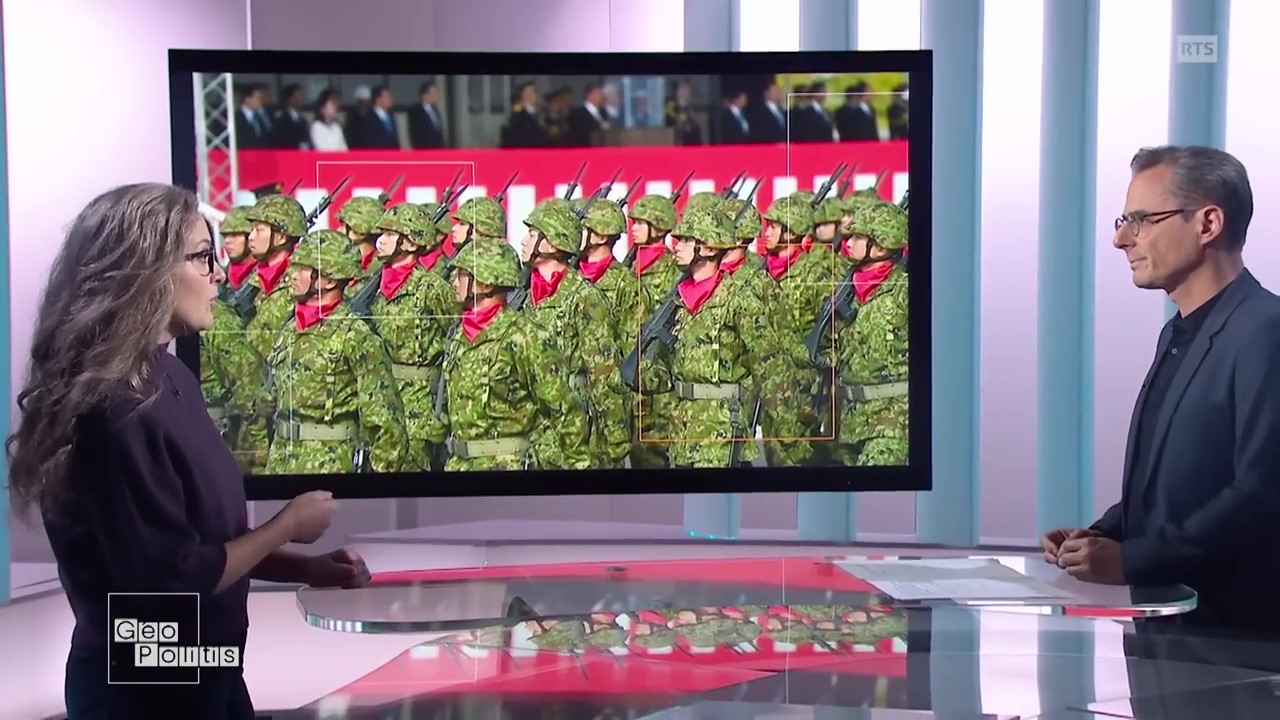
Japan is accelerating its rearmament, but is struggling to recruit soldiers.
Newly graduated 19-year-old Takuma Hiyane has just enlisted. Hiyane: "I find the training very physical and tough, but I'm used to it because I played sports in school. I find using a firearm and things like that, which I'm not used to, more exhausting and stressful. This experience leaves its mark."
Self-Defense Forces
For several years, the Japanese Self-Defense Forces have struggled to attract young recruits. In 2023, the country only managed to enlist barely half of the 20,000 trainee soldiers it hoped for. The declining birth rate is hindering recruitment, especially since the profiles sought are more varied than in the past. Officer Toshiyuki Asou: "We used to need physically strong troops with strong combat capabilities. But the current national defense situation requires a more diverse personnel in terms of skills and knowledge."
To try to attract more candidates, the minimum age for enlistment has been raised from 26 to 32. Pay has also been increased. The authorities also hope that the ongoing feminization of the military will accelerate. Asou: "We are currently looking for a wide range of personnel. This is because the national security landscape is diversifying, encompassing cybersecurity, space defense, electromagnetic fields, and, of course, intelligence work."
In a context marked by the rise of regional threats, Japan is focusing on drones, missile counter-attack capabilities, and technological innovation. The archipelago is strengthening its defenses to a level unseen since the post-war period. Takaichi: "Japan must proactively engage in the fundamental strengthening of its defense capabilities.
That is why I will take measures to achieve the annual military spending target of 2% of gross domestic product."
2% of GDP by March 2026, two years ahead of the target set by her predecessor. The new prime minister plans to review Japan's pacifist constitution inherited from the end of World War II.
Rearmament is not popular
LHE: Constance Sereni, we've seen the difficulty self-defense forces have in recruiting, especially within a population deeply pacifist after the traumas of World War II. How does the population experience this rearmament, this re-engagement? CS: It's true that historically, the population has always been very pacifist since the end of the war. One of the ways to overcome this trauma. And above all, there hasn't been any resolution to the guilt that would allow for healing the wounds of the past.
Pacifism
CS: One way to respond to these traumas has been through pacifism. So, to take this Article 9, this pacifist article of the constitution, as a source of pride, ultimately. Not as a clause imposed by the Americans, but as a unique characteristic of Japan. Japan would be the land of peace.
And in a way, it could be, since it's the only country to have been bombed by atomic bombs. The only country that knows what it's like to be bombed by atomic bombs. And therefore, the champion of peace. People are quite attached to this image, which means that overall, the idea of Japan rearming isn't very popular. LHE: A more offensive army would therefore be truly unconstitutional. CS: Absolutely unconstitutional because Article 9 states that Japan does not have the right to maintain forces capable of attacking. In fact, it doesn't have the right to belligerency, that is, the right to wage war. This article was slightly circumvented in the 1950s to allow Japan to have what is called a Self-Defense Force. It's not called an army in Japanese, but rather a Self-Defense Force (自衛隊, jieitai). LHE: And the distinction is very important in people's minds. And that's why there's a proactive defense? I believe that's the term used and promoted by a whole movement, including Sanae Takaichi. CS: Absolutely. A proactive defense, called 'collective defense' in Japanese (集団防衛 しゅうだん・ぼうえい shūdan·bōei). That is to say, where one would actually come to the aid of these allies in the name of self-defense. As things stand, if the United States were to be attacked, Japan does not have the right to help it since it is not a case of self-defense. But the idea would probably be to broaden this Article 9 rather than completely transform it. So far, this has proven very difficult. LHE: And the military budget is only increasing. Also under pressure from the United States. CS: Absolutely. The Japanese army, the Self-Defense Forces, is in fact one of the most expensive militaries in the world. And it's one of the United States' biggest customers. So, of course, the United States has every interest in encouraging Japan to continue spending, especially on its own.